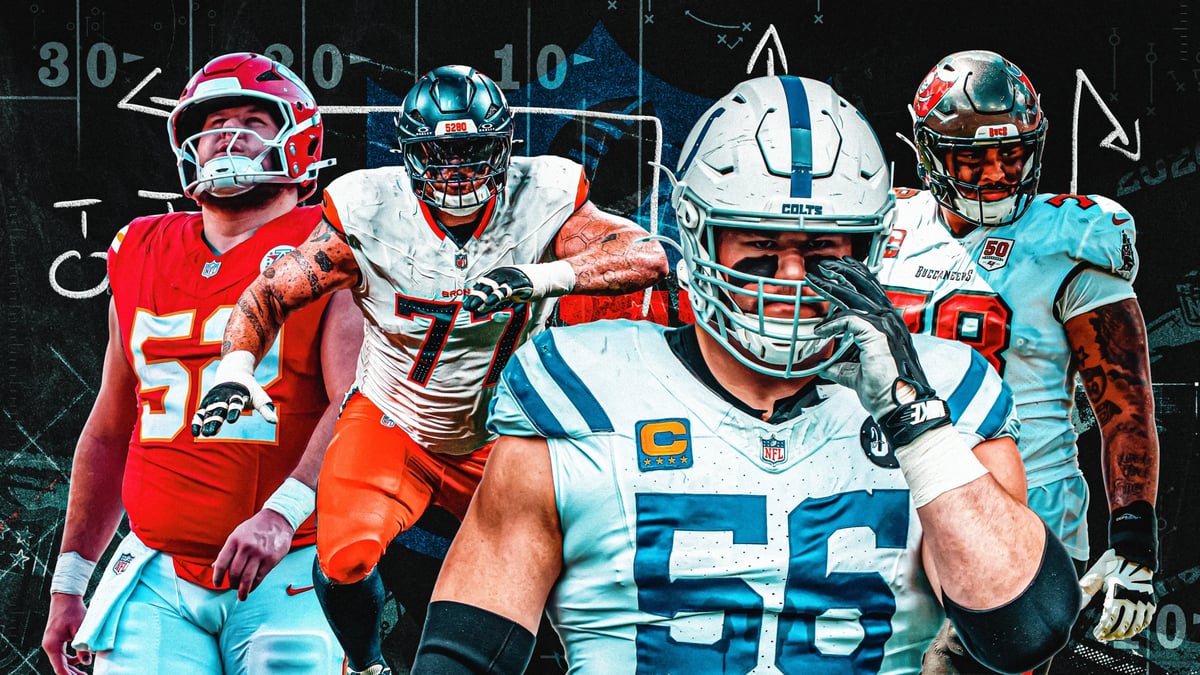
- The Lions keep the No. 1 ranking going into Week 7: Detroit was on a bye in Week 6 but is getting even healthier entering this week.
- The Browns‘ new group is gelling: Cleveland moves up four spots thanks to continued strong play from rookie Spencer Fano and newcomer Zion Johnson.
- The Broncos fall to No. 5: Denver's pass protection had some struggles against a stout Seahawks front, continuing the team's drop.

The offensive line is arguably the most important unit in football. The group, or even a single weak link within it, can derail a season quickly.
Throughout the season, I will be ranking every offensive line in the NFL each week. That includes updating the list as we learn more about each player as the year wears on, and groups change due to injuries or players returning.
Here are the updated PFF offensive line rankings after Week 6 of the NFL season. For all grades and metrics, including pass-blocking win rate, positively and negatively graded run-block rates, island rate and island win rate, subscribe to PFF Pro.
Methodology
To score each offensive line, I first gave each player a grade between 5 and 10 in 0.5 increments, using their PFF grades over the past three years where applicable to shape that score, with a weighting toward pass protection. I then got an average for the group, with a slight weighting toward the left and right tackles to reach a mark out of 10 for each team in the league.
Over the first four weeks of the season, I will only update the rankings based on lineup changes. That’s because the sample size in the first four weeks of the year is quite small. As we add each week and learn more about 2026 performance, we'll use that to increase or decrease each player's score.
1. Detroit Lions (no change)
- LT: Penei Sewell
- LG: Christian Mahogany
- C: Juice Scruggs/Cade Mays
- RG: Tate Ratledge
- RT: Blake Miller
The Lions were on a bye this week and retain the top spot they held after Week 5. Penei Sewell has earned a PFF grade above 90.0 in two of the past three games after a slow start, having switched to left tackle, but the biggest story is how quickly right tackle Blake Miller has looked comfortable in the NFL. He has yet to allow a sack in the first four games of his NFL career, and has surrendered just nine pressures from 166 pass-blocking snaps.
2. San Francisco 49ers (no change)
- LT: Trent Williams
- LG: Connor Colby
- C: Jake Brendel
- RG: Dominick Puni
- RT: Colton McKivitz
The 49ers’ offensive line gave up just five pressures, none of which were sacks, in the team’s win over the Washington Commanders on “Monday Night Football.” San Francisco also just didn’t really have a weak link in the win, with every starting offensive lineman recording a PFF grade of 60.0 or better. Both tackles went the full game without surrendering a pressure.
3. Indianapolis Colts (up 2)
- LT: Bernhard Raimann
- LG: Quenton Nelson
- C: Tanor Bortolini
- RG: Matt Goncalves
- RT: Jalen Travis
The Colts’ offensive line was one of the few positives about the team in its loss to the Tennessee Titans, with left tackle Bernhard Raimann and left guard Quenton Nelson both earning PFF pass- and run-blocking grades above 75.0. Yet center Tanor Bortolini struggled again, compiling a sub-50.0 PFF grade for the third time in six games this season.
4. Buffalo Bills (up 3)
- LT: Dion Dawkins
- LG: Alec Anderson
- C: Connor McGovern
- RG: O’Cyrus Torrence
- RT: Spencer Brown
The lowest PFF pass-blocking grade among this group in Week 6 was a tie between both guards at 74.5, and that still tied for 16th at the position this week. Dion Dawkins was fantastic in pass protection again at left tackle, with no pressures allowed from 38 pass-blocking snaps.
5. Denver Broncos (down 2)
- LT: Garett Bolles
- LG: Ben Powers
- C: Luke Wattenberg
- RG: Quinn Meinerz
- RT: Mike McGlinchey
Left tackle Garett Bolles and right guard Quinn Meinerz were stellar for the Broncos in their win over the Seattle Seahawks on Thursday. Both didn’t relinquish a pressure from 33 passing plays and earned PFF pass-blocking grades above 85.0. The same wasn’t true of the rest of the line, though, with the other three starters combining to allow six pressures and none of the three registering a PFF pass-blocking grade above 55.0.
6. Chicago Bears (down 2)
- LT: Theo Benedet
- LG: Joe Thuney
- C: Garrett Bradbury
- RG: Jonah Jackson
- RT: Darnell Wright
The Bears’ offensive line had an up-and-down game against the Atlanta Falcons on Sunday, with starting offensive tackle Theo Benedet and Darnell Wright both not giving up a pressure. On the other hand, the Bears’ other three starters permitted multiple pressures. Despite Wright’s success in pass protection, he struggled as a run-blocker. It’s also worth noting that right guard Jonah Jackson left the game with an injury and was limited in practice on Tuesday.
7. Pittsburgh Steelers (down 1)
- LT: Troy Fautanu
- LG: Mason McCormick
- C: Zach Frazier
- RG: Brock Hoffman
- RT: Max Iheanachor
Zach Frazier had another big game for the Steelers, and looks set to contend for All-Pro honors in his third season out of West Virginia. It was a solid day overall in pass protection for the Steelers, with every player earning a PFF pass-blocking grade above 60.0, but three of their five starters recorded sub-60.0 PFF run-blocking grades.
8. Tampa Bay Buccaneers (up 1)
- LT: Tristan Wirfs
- LG: Ben Bredeson
- C: Graham Barton
- RG: Cody Mauch
- RT: Luke Goedeke
The Buccaneers’ offensive line didn’t have a terrible day against the Pittsburgh Steelers on Sunday, but the group had some issues. Left guard Ben Bredeson was the lowest-graded player in the group, and for the second time this season, he ended a game with a PFF pass-blocking grade below 40.0. Left tackle Tristan Wirfs allowed five pressures from 53 pass-blocking snaps. That was one more than the four he had allowed coming into the game, and it was also the highest total he has ever permitted in a single game in his career.
9. Seattle Seahawks (up 1)
- LT: Charles Cross
- LG: Grey Zabel
- C: Jalen Sundell
- RG: Christian Haynes/Beau Stephens
- RT: Abraham Lucas
The right side of the Seahawks’ offensive line really struggled in the loss to the Denver Broncos on Thursday. Right tackle Abraham Lucas gave up seven pressures, including a pair of sacks, while the duo of Christian Haynes and Beau Stephens at right guard allowed eight — including a combined four sacks and quarterback hits.
10. Atlanta Falcons (up 1)
- LT: Jake Matthews
- LG: Matthew Bergeron
- C: Ryan Neuzil
- RG: Chris Lindstrom
- RT: Jawaan Taylor
Left tackle Jake Matthews surrendered just one pressure from 44 pass-blocking snaps in the loss to the Chicago Bears, but he was the only player to avoid allowing multiple pressures. No player struggled more in pass protection than right tackle Jawaan Taylor, who was credited with six pressures — a total that was just two fewer than the rest of the unit combined.
11. Cincinnati Bengals (up 2)
- LT: Orlando Brown Jr.
- LG: Dylan Fairchild
- C: Ted Karras
- RG: Dalton Risner
- RT: Amarius Mims
The Bengals jump up one spot on their bye week after some woes for the Rams. Four of the Bengals’ five starters on the offensive line have compiled PFF pass-blocking grades above 60.0, and the lowest-graded of the five in Ted Karras has only been slightly below that mark at 59.2. Right guard Dalton Risner is having an impressive season as a run-blocker, ranking third among right guards with an 80.7 PFF run-blocking grade.
12. Los Angeles Rams (no change)
- LT: David Quessenberry
- LG: Steve Avila
- C: Coleman Shelton
- RG: Kevin Dotson
- RT: Warren McClendon Jr.
Left tackle David Quessenberry wound up being the highest-graded player in this unit, as he stepped in to replace the suspended Alaric Jackson in the Rams’ loss to the Arizona Cardinals on Sunday. He earned an 84.8 PFF pass-blocking grade and a 78.7 PFF run-blocking grade, both marks that led the Rams’ offensive line in Week 6. Right guard Kevin Dotson was ineffective in pass protection once again. His career high in pressures allowed in a single season came in 2024 when he was responsible for 30 from 668 pass-blocking snaps. He’s already past halfway that with 16 in 2026, but they have come on just 286 pass-blocking snaps.
13. Dallas Cowboys (no change)
- LT: Tyler Guyton
- LG: Tyler Smith
- C: Cooper Beebe
- RG: Tyler Booker
- RT: Terence Steele
The interior of this line was absolutely fine in the Sunday night loss to the Green Bay Packers, with the trio combining to allow just three pressures and all finishing with PFF pass-blocking grades above 74.0. The same was not true about Dallas’ tackle duo, with left tackle Tyler Guyton allowing seven pressures and right tackle Terence Steele charted with six.
14. Minnesota Vikings (up 1)
- LT: Ryan Van Demark
- LG: Joe Huber
- C: Blake Brandel
- RG: Will Fries
- RT: Brian O’Neill
The Vikings had a bye this week but move up one spot due to the Raiders’ problems. They should also get Christian Darrisaw, who missed this past week with a concussion, to return to the lineup at left tackle. That should give Minnesota a strong tackle pairing to help mitigate losing Donovan Jackson at left guard to injury. Ryan Van Demark and Joe Huber notched sub-60.0 PFF grades at left tackle and guard, respectively, in the win over the New Orleans Saints.
15. Las Vegas Raiders (down 5)
- LT: Kolton Miller
- LG: Spencer Burford
- C: Tyler Linderbaum
- RG: Caleb Rogers
- RT: DJ Glaze
For the second straight week, the Raiders had some trouble in pass protection, in particular with center Tyler Linderbaum. He recorded a 29.8 PFF pass-blocking grade and allowed a pair of pressures, both resulting in quarterback hits. While this group didn’t surrender a sack in the game, it did combine to allow five quarterback hits, and also had three players with PFF run-blocking grades below 60.0.
16. New York Jets (down 1)
- LT: Olu Fashanu
- LG: Jordan Meredith
- C: Josh Myers
- RG: Joe Tippmann
- RT: Armand Membou
The Jets’ offensive line combined to allow six pressures in the loss to the New England Patriots on Sunday, and saw four of its five starters collect PFF run-blocking grades above 65.0. Center Josh Myers was New York’s lowest-graded player both in pass protection and as a run-blocker.
17. New York Giants (no change)
- LT: Andrew Thomas
- LG: Jon Runyan
- C: Bryan Hudson
- RG: Francis Mauigoa
- RT: Jermaine Eluemunor
The Giants went into last week without right tackle Jermaine Eluemunor, and then sat left tackle Andrew Thomas for the final 25 snaps of the loss to the New Orleans Saints after being checked for a concussion. Rookie right guard Francis Mauigoa was the only player to secure a PFF pass-blocking grade below 65.0, coming in at 33.0. Further, the Giants struggled to get much room in the run game, with their running backs rushing for just 34 yards on 14 carries.
18. Philadelphia Eagles (down 2)
- LT: Jordan Mailata
- LG: Willie Lampkin
- C: Jake Majors
- RG: Tyler Steen
- RT: Markel Bell
This Eagles offensive line is down three starters from the start of the season, and there were plenty of concerns coming out of Sunday’s loss to the Carolina Panthers. On the plus side, Jordan Mailata and Markel Bell didn’t allow any pressures from 52 pass-blocking snaps, and the same was true of Willie Lampkin at left guard. Center Jake Majors struggled again, though, yielding four pressures for the second straight week. On top of that, the group as a whole had trouble getting much going on the ground, with the Eagles averaging just 2.7 yards per carry.
19. Kansas City Chiefs (up 3)
- LT: Kahlil Benson
- LG: Kingsley Suamataia
- C: Creed Humphrey
- RG: Trey Smith
- RT: Jaylon Moore
Kingsley Suamataia got the start at left guard again with the Chiefs coming out of their bye week, having previously been benched for Mike Caliendo. The former second-round draft pick made the most of his return to the lineup, earning a 90.3 PFF run-blocking grade and allowing no pressures from 27 pass-blocking snaps. The same was true of right guard Trey Smith, who finished with a 91.0 PFF run-blocking grade while not giving up a single pressure from 36 pass-blocking snaps. Starting right tackle Jaylon Moore left the game after suffering a concussion, though Joshua Ezeudu did a solid job in relief with just one pressure from 15 pass-blocking snaps.
20. Washington Commanders (down 1)
- LT: Brandon Coleman
- LG: Chris Paul
- C: Lucas Patrick
- RG: Sam Cosmi
- RT: Josh Conerly Jr.
Right guard Sam Cosmi was the highest-graded player on this offensive line once again in Week 6, but the line as a whole had some calamities in the loss to the San Francisco 49ers on Monday. Washington’s front five combined to allow 18 pressures, eight of which were either sacks or quarterback hits. Right tackle Josh Conerly Jr. permitted six pressures on 51 pass-blocking snaps, a mark that led the team.
21. New Orleans Saints (down 1)
- LT: Asim Richards
- LG: David Edwards
- C: Erik McCoy
- RG: Cesar Ruiz
- RT: Taliese Fuaga
After a solid performance against the Minnesota Vikings in Week 5, left tackle Asim Richards struggled again in the Saints’ Week 6 win over the New York Giants, earning a sub-60.0 PFF grade for the third time in four games. He was the only player in the group who was credited multiple pressures, though, with right tackle Taliese Fuaga not giving up more than a single pressure for the first time in a game this season. Right guard Cesar Ruiz left the game with a knee injury and didn’t return, though he did travel with the Saints to Paris ahead of their Week 7 matchup against the Pittsburgh Steelers.
22. Cleveland Browns (up 4)
- LT: Spencer Fano
- LG: Zion Johnson
- C: Elgton Jenkins
- RG: Austin Barber
- RT: Tytus Howard
Left guard Zion Johnson owns a 69.7 PFF grade through the first six games of the 2026 season, putting him on track for a career high. He allowed a pair of pressure in the win over the Baltimore Ravens this past week, taking his season total to six on 238 pass-blocking snaps. Rookie left tackle Spencer Fano had another strong day in pass protection, giving up just two pressures from 39 pass-blocking snaps.
23. Tennessee Titans (no change)
- LT: Dan Moore Jr.
- LG: Peter Skoronski
- C: Austin Schlottmann
- RG: Atonio Mafi
- RT: JC Latham
The Titans’ offensive line looked about as good as it has all season in the win over the Indianapolis Colts, with Atonio Mafi the only player to post a PFF pass-blocking grade below 70.0 in the game. He allowed two pressures from 24 pass-blocking snaps, a total that was matched by the rest of the line combined.
24. Baltimore Ravens (down 3)
- LT: Ronnie Stanley
- LG: John Simpson
- C: Cam Jurgens
- RG: Vega Ioane
- RT: Roger Rosengarten
Every starter on the Ravens’ offensive line finished with a PFF pass-blocking grade above 60.0 in the loss to the Cleveland Browns on Sunday, though both starting tackles combined to allow seven pressures. The biggest issue was Baltimore’s inability to get any movement in the run game after a strong opening drive. None of the team’s five starters ended the game with PFF run-blocking grades above 60.0, and three were below 50.0.
25. Miami Dolphins (down 1)
- LT: Patrick Paul
- LG: Kadyn Proctor
- C: Aaron Brewer
- RG: Jonah Savaiinaea
- RT: Austin Jackson
The Dolphins were on a bye week in Week 6. The week prior, their offensive line had a tough outing against the Cincinnati Bengals, with every player who was on the field for at least 10 pass-blocking snaps allowing multiple pressures. Jonah Savaiinaea left the game with an injury, and his replacement Jarrett Kingston wound up being Miami’s highest-graded offensive lineman in the game — compiling PFF grades above 75.0 both in pass protection and as a run-blocker.
26. Carolina Panthers (down 1)
- LT: Rasheed Walker
- LG: Damien Lewis
- C: Luke Fortner
- RG: Robert Hunt
- RT: Taylor Moton
Right tackle Taylor Moton returned to the lineup for the first time this season, securing a 63.5 PFF pass-blocking grade and permitting a pair of pressures from 46 pass-blocking snaps in the win over the Philadelphia Eagles. Right guard Robert Hunt was both Carolina’s highest-graded pass-blocker — with no pressures allowed — and its lowest-graded run-blocker in the game. The line as a whole didn’t do a great job as run-blockers, with 102 of Chuba Hubbard’s 120 yards coming after contact.
27. New England Patriots (no change)
- LT: Will Campbell
- LG: Alijah Vera-Tucker
- C: Jared Wilson
- RG: Ben Brown
- RT: Morgan Moses
The Patriots lost three players to injury in the win over the New York Jets, and are expected to be without both starting guards when they take on the Chicago Bears on “Thursday Night Football.” Caleb Lomu impressed in relief of Morgan Moses again, allowing no pressures from 30 pass-blocking snaps, and could be called on to start again at right tackle if Moses can’t go on Thursday — or even on the interior if the latter can. It’s worth noting that the Patriots only dropped in the rankings last week because of the expectation that Will Campbell would be out at the time of writing, and New England would have jumped up again if not for the injuries to the interior this week.
29. Jacksonville Jaguars (up 1)
- LT: Walker Little
- LG: Emmanuel Pregnon
- C: Robert Hainsey
- RG: Ezra Cleveland
- RT: Cole Van Lanen
The Jaguars got a strong performance in pass protection from their starting tackles on Sunday, with Walker Little and Cole Van Lanen combining to allow just three pressures on 44 pass-blocking snaps in the loss to the Houston Texans. Jacksonville has had more struggles on the interior, with rookie left guard Emmanuel Pregnon yet to finish a game with a PFF grade of 60.0 or better, and center Robert Hainsey’s season-high PFF grade coming this past week at just 61.7.
29. Houston Texans (down 1)
- LT: Aireontae Ersery
- LG: Keylan Rutledge
- C: Evan Brown
- RG: Ed Ingram
- RT: Trent Brown
Trent Brown was the only starter on the offensive line to collect a PFF grade above 70.0 in the win over the Jacksonville Jaguars in London on Sunday. He and left tackle Aireontae Ersery combined to yield seven pressures, while rookie left guard Keylan Rutledge gave up two. Center Evan Brown and right guard Ed Ingram both didn’t allow any pressures.
30. Arizona Cardinals (no change)
- LT: Jayden Williams
- LG: Isaac Seumalo
- C: Hjalte Froholdt
- RG: Jon Gaines II
- RT: Elijah Wilkinson
The Cardinals got an effective showing from backup left tackle Jayden Williams in their win over the Los Angeles Rams on Sunday, with the 2026 seventh-round draft pick allowing just two pressures from 36 pass-blocking snaps. He was also the only starter on this offensive line to not relinquish a quarterback hit, with the other four starters giving up one each.
31. Green Bay Packers (no change)
- LT: Jordan Morgan
- LG: Laken Tomlinson
- C: Sean Rhyan
- RG: Travis Glover
- RT: Anthony Belton
It is still early, especially given how much the unit underwhelmed in the first few weeks of the season, but this Packers offensive line has looked at least functional in pass protection over the past two weeks. Green Bay had three starters who earned PFF pass-blocking grades above 60.0 in the win over the Dallas Cowboys. However, the unit did still allow 15 total pressures in the game, so it isn’t moving up quite yet.
32. Los Angeles Chargers (no change)
- LT: Travis Burke
- LG: Logan Taylor
- C: Jake Slaughter
- RG: Cole Strange
- RT: Alex Harkey
Given the volume of injuries on the offensive line for the Chargers, the group’s performance against the Kansas City Chiefs this past weekend was not that bad. Rookies Travis Burke and Jake Slaughter produced PFF pass-blocking grades above 70.0, with left tackle allowing three pressures from 49 pass-blocking snaps and the center one. Rookie right tackle Alex Harkey struggled, though, notching a 36.2 PFF pass blocking grade. It’s obvious that this group needs right tackle Joe Alt back in action as soon as possible.

 © 2026 PFF - all rights reserved.